March 2026
This month, I thought I’d share a few thoughts about how first-person accounts from women in history enliven their stories and help us understand their lives. The same would undoubtedly be true of men, but since I’m writing about women, I’ll keep the focus there. Also, it’s Women’s History Month!
As you know, I am interviewing women who work in the manual trades. I am also investigating women who did similar work in generations past, their forebearers, if you will. As I research those women in history, I have found that memoirs, oral histories and other contemporary accounts enrich my understanding, show the richness of their personalities and create a sense of connection. Here are three examples.
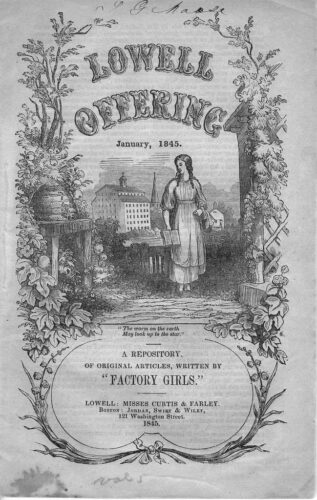
In my January 2025 newsletter I wrote about young women who worked in textile mills in Lowell, Massachusetts in the early 19th century. Much has been written about the “mill girls” or “factory girls,” as they were called, but one source was particularly effective in illuminating their lives. Between 1840 and 1845, women in the mills published the Lowell Offering, a magazine filled with their stories, essays and poems. One essay, by Sarah Bagley, really caught my eye. In an essay titled “Pleasures of Factory Life,” she described the few moments of pleasure she found during a work day.
“In the mill we see displays of the wonderful power of the mind. Who can closely examine all the movements of the complicated, curious machinery, and not be led to the reflection, that the mind is boundless, and is destined to rise higher and still higher; and that it can accomplish almost anything on which it fixes its attention?”
The mill girls’ lives were highly regimented, both during work and in their off hours, but Sarah valued the stolen moments of reflection. Without her description, we wouldn’t know this, but since we do, she seems like a person we can relate to – haven’t we all let our minds wander, even at work?
Later, Sarah helped form the Lowell Female Labor Reform Association and became its president. The association lobbied for better working conditions, including a 10 hour work day which the Massachusetts legislature initially rejected, although the association ultimately prevailed. (On a separate note, I recently read that the Lowell National Historical Park has stopped showing certain videos that explain the arduous conditions of work in the mills. You can guess the reason for that.)
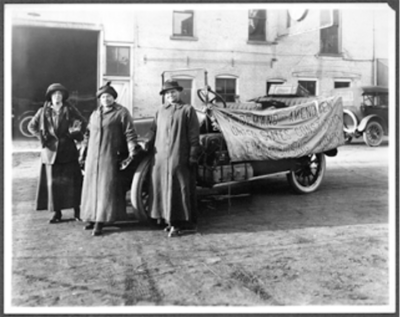
Here’s another example of how a woman’s words revealed the inside story of a notable achievement. In 1915, three women drove from San Francisco to Washington, DC to publicize their delivery of a petition in support of women’s suffrage to President Woodrow Wilson. Driving was a real adventure in 1915. Roads were often dirt or mud, cars uncomfortable, maps nonexistent for vast swaths of the country, gas stations few and far between.
On the journey, Sarah Bard Field, a poet and activist, was the designated speaker. Wherever they stopped, she would speak to the crowds, advocate for women’s rights and add signatories to the petition. The other two women, both immigrants from Sweden, drove, changed tires and did mechanical repairs. After being on the road for 13 weeks, they arrived in Washington on the opening day of the new Congressional session and Sarah presented the petition to the president. The event got favorable press coverage, which was, of course, what they wanted. As Sarah said, “I only know we have made history.”
Many years later, she gave an oral history which shed a different light on the trip. She remembered that the Swedish women resented her for attracting attention when she spoke. They, and one in particular, felt neglected and under-appreciated, which made the trip all the more uncomfortable, despite its successful finale in Washington. Hearing the inside story from Sarah, we get a fuller and more nuanced understanding of how things really were. And, again, we relate, because we’ve all been in situations laden with resentment and tension.
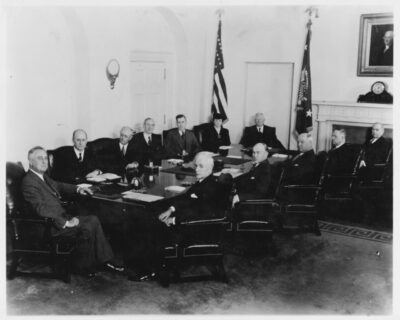
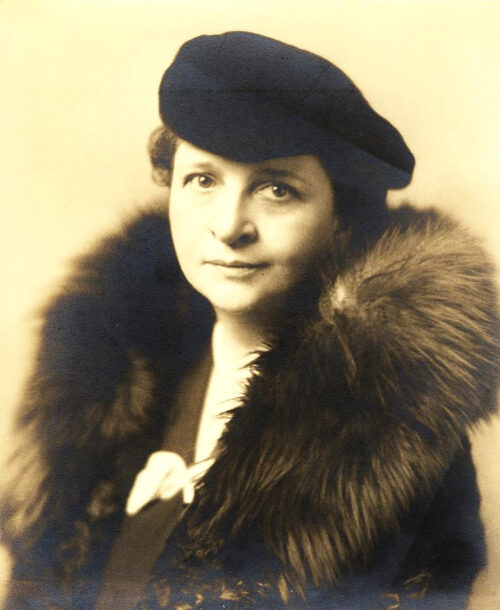
In two newsletters – October 2022 and February 2026 – I’ve written about Frances Perkins, Secretary of Labor under President Franklin Roosevelt. I have visited the Frances Perkins homestead in Maine, now a National Historic Landmark, and I’ve read two biographies of her, all highly informative. But she came most alive in her own writing. In 1946, she wrote a political memoir of FDR in which she described their conversations and how they strategized to get New Deal legislation passed. Most interestingly, she also described the first cabinet meeting. As the first woman to serve in a cabinet position, she approached the meeting with caution.
“I was apprehensive and on guard at the first official cabinet meeting. As the only woman member, I did not want my colleagues to get the impression that I was too talkative. I resolved not to speak unless asked to do so. . . The President asked questions around the table and commented on the replies. Finally, he turned to me. ‘Frances, don’t you want to say something?’ I didn’t want to, but I knew I had to. There was silence. My colleagues looked at me with tense curiosity. I think some weren’t sure I could speak. I said what I had to say, quickly and briefly.”
I find her words fascinating. They reveal what she was thinking, the image she wanted to project and how she went about it. Like the accounts of the other women highlighted here, her words allow us to know her more fully. Frances was credited with bringing much of the New Deal legislation into being. But now we know that, just like all of us, she could suffer from uncertainty. (In the picture above, she’s not easy to spot, but that’s Frances, seated in front of the flag, wearing her signature hat.)
Knowing that things were not always smooth, even for women of great accomplishment, makes their lives richer and more relatable. As you can imagine, I’m having fun reading about women in history, particularly when I find behind-the-scenes accounts like these. And when I interview women in the trades today, I try to uncover the same kind of descriptions of what their lives are like.
* * *
If you have a friend who would be interested in my work, I would be pleased for you to forward this newsletter. Anyone can subscribe to keep up with the latest news, and to stay in touch. Just visit my website and sign up on the newsletter page. https://kathleencstone.com