October 2026
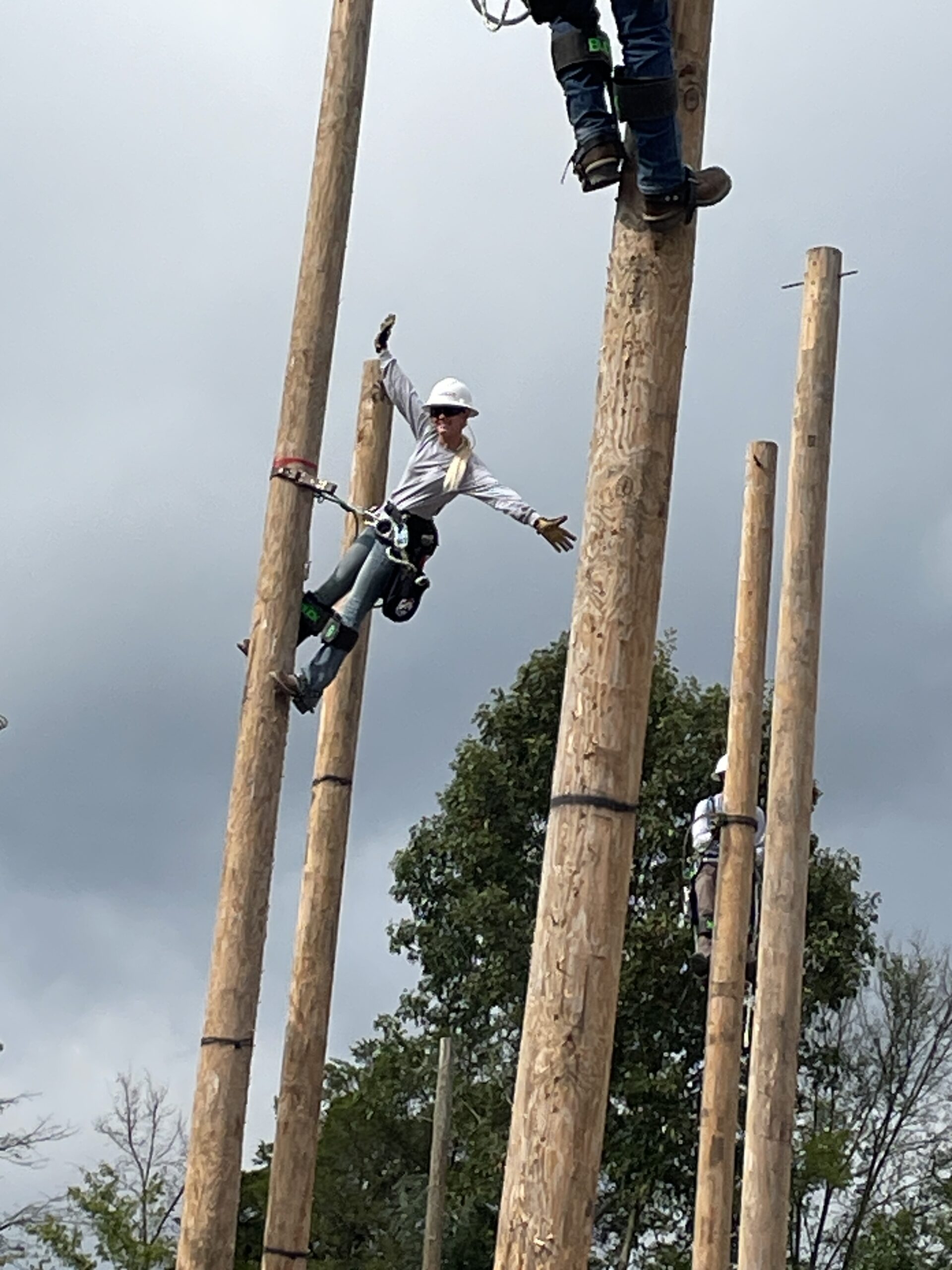
Last week I visited the Southeast Lineman Training Center in Trenton, Georgia where I saw 460 students, 7 of them women, learning to become linemen – climbing phone poles, installing, repairing electrical equipment and communication lines, and much more. Once they graduate and get jobs, these young women and men will help care for the grid so that when people like me (and maybe you) flip a switch or press a button, the lights and the computer will work as we expect and need.
The electrical program at SLTC runs for 15 weeks. In addition to pole climbing and powerline construction and maintenance, students learn to operate digger derricks, bucket trucks and cranes. They also get certified in flagging, OSHA regulations, CPR and first aid, and they earn a Class A Commercial Drivers License.
On the day I went to the training center, thundershowers were predicted. If there were to be lightning, students would not be climbing poles, and I very much wanted to see that. I kept my fingers crossed. While driving from my hotel to the training center, I passed through two short downpours. The clouds were dark and threatening. But I was lucky. The rain held off while I was on site and I got to see some amazing pole climbing.
The students were in the third week of their program, before they are allowed to climb all the way up a pole. In the first week, they climb only 5 feet. Then they progress to a drill that takes them up 15 feet, back down to the 5 foot mark, then back up to 15. Some students told me they were content with this progression; others itched to go higher. And some of them intend to spend their careers up high. One woman said she wants to do helicopter line work, which will keep her way up there most of the time. Have you seen any YouTube videos of helicopter line work? They’re terrifying.
The poles are simple wooden poles with no steps, cutouts or other places to put a foot. To get up, a student attaches gaffs to her boots, then digs them into the poles as she climbs. A gaff looks like this, like a dagger.
Students also wear a safety belt that encircles both them and the pole and prevents them from slipping. It also gives them confidence. One woman told me that she had started out scared but now “it thrills my heart that I am comfortable up the pole, hanging there, relaxed.”
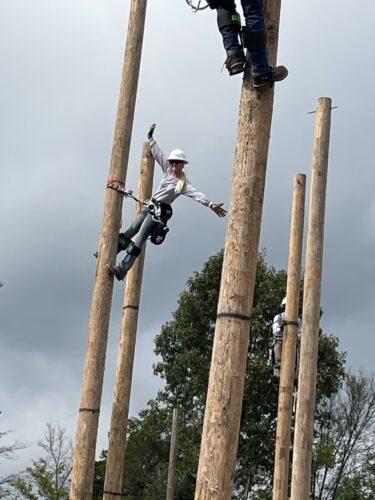
I watched as students did a “hurt man” drill, donning their climbing equipment at top speed and getting up the pole to rescue a hypothetical injured co-worker. They were fast and proficient, even at this early stage, and I imagine they’ll only get better. Here’s a video of the drill. https://youtube.com/shorts/pNgYkNcgobQ?feature=share
I gathered with the women students and found them nothing short of amazing. They were relatively young – some just out of high school, others with a year or so of college, one having served in the military. When I asked why they wanted to be linemen, their answers were individual but they echoed one another in spirit –
I like to be outside
I have a work ethic
I want to do something new
In a short time you can learn to do a lot for yourself
I didn’t want to be too comfortable
Climbing a pole is fun.
Then I asked how they heard about line work in the first place. Some answers reflected family influence –
My uncle went here
My grandfather was an electrician who did inside wiring, but I prefer to be outside
My Dad is a lineman and I used to look at his climbing gear.
One woman gave a really surprising answer –
A friend who was a lineman got zapped on a power line; his death inspired me.
Meeting these women reminded me why I am enjoying this book project so much. I’m learning about lines of work that are totally new to me. I’m meeting women who are ambitious and determined to succeed in ways completely different from what I did, or what the women in my first book did. And I like to be reminded of how intertwined our different worlds are. After all, where would we be without lineworkers keeping the electricity running, without truck drivers picking up our trash, without carpenters, sheet metal workers, electricians and plumbers constructing and maintaining our homes and offices, without maritime pilots guiding ships into port, and other tradespeople doing the countless other jobs that keep our world running.
* * *
Now I’ll close with two quick updates. First, I have additional titles for the list of recommended books in my September newsletter. A friend recommended these two: Memoir from Antproof Case by Mark Helprin and Tomorrow in the Battle Think On Me by Javier Marais. She told me that “Both have stuck with me for weeks now. I think you’d find them ‘worthy.’


The third recommendation, Your Absence is Darkness, by Jon Kalman Stefansson, a groundbreaking Icelandic author, comes from my husband. Kalman’s work also includes his highly acclaimed Heaven and Hell that deals with a sea voyage worthy of Melville, and its aftermath.

Second, on October 27 we’ll kick off the new Booklab season with Amy Mittleman talking about her book Dames, Dishes, and Degrees: Faculty Wives in America. The book goes back to a time when women, no matter how credentialed, could not get faculty positions at colleges and universities. Finding themselves on campuses with their professor husbands, they formed clubs to provide new learning experiences, find opportunities for public service, and to create a sense of community. If you can come to Booklab on the evening of the 27th, please let me know. I’d love to see you there.

* * *
If you have a friend who would be interested in what I’m up to, please feel free to forward this newsletter. Anyone can subscribe to keep up with my latest news, bookish and otherwise, and to stay in touch. Just visit my website and sign up on the newsletter page.