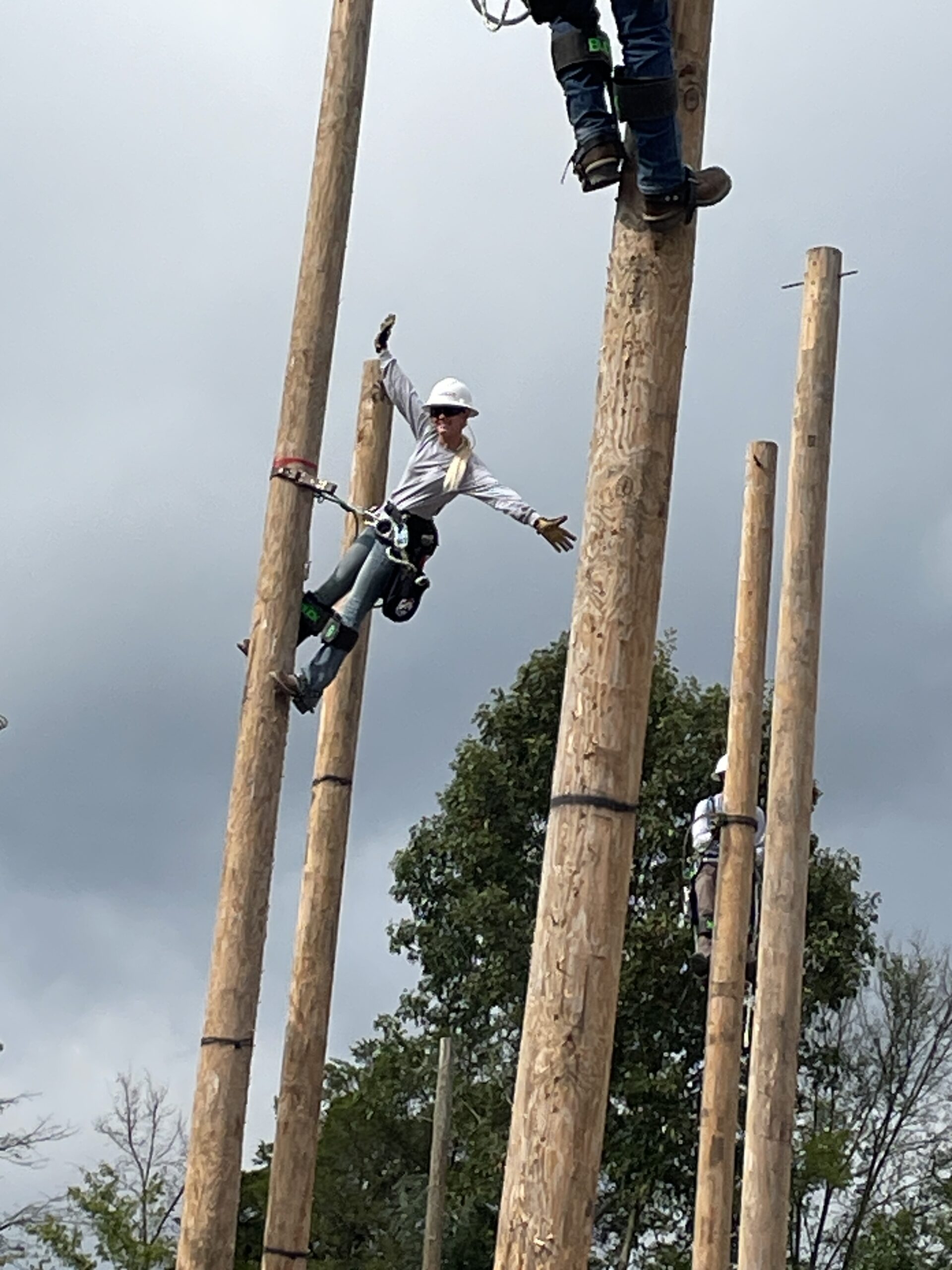
There are times when working on my book is so much fun! It gives me the chance to dip my toes into veins of history that are completely new to me. (I also like to dip my toes into tidal pools, as you know.) Most recently, the vein I explored was the advent of four-wheel drive technology. That was prompted by my conversation with Kellylynn McLaughlin, a truck driver in Oklahoma. Her story is really interesting, not at all a straight path from school to driving, and you’ll hear more about that later. But now I want to turn to Luella Bates, generally credited as the first female licensed truck driver.
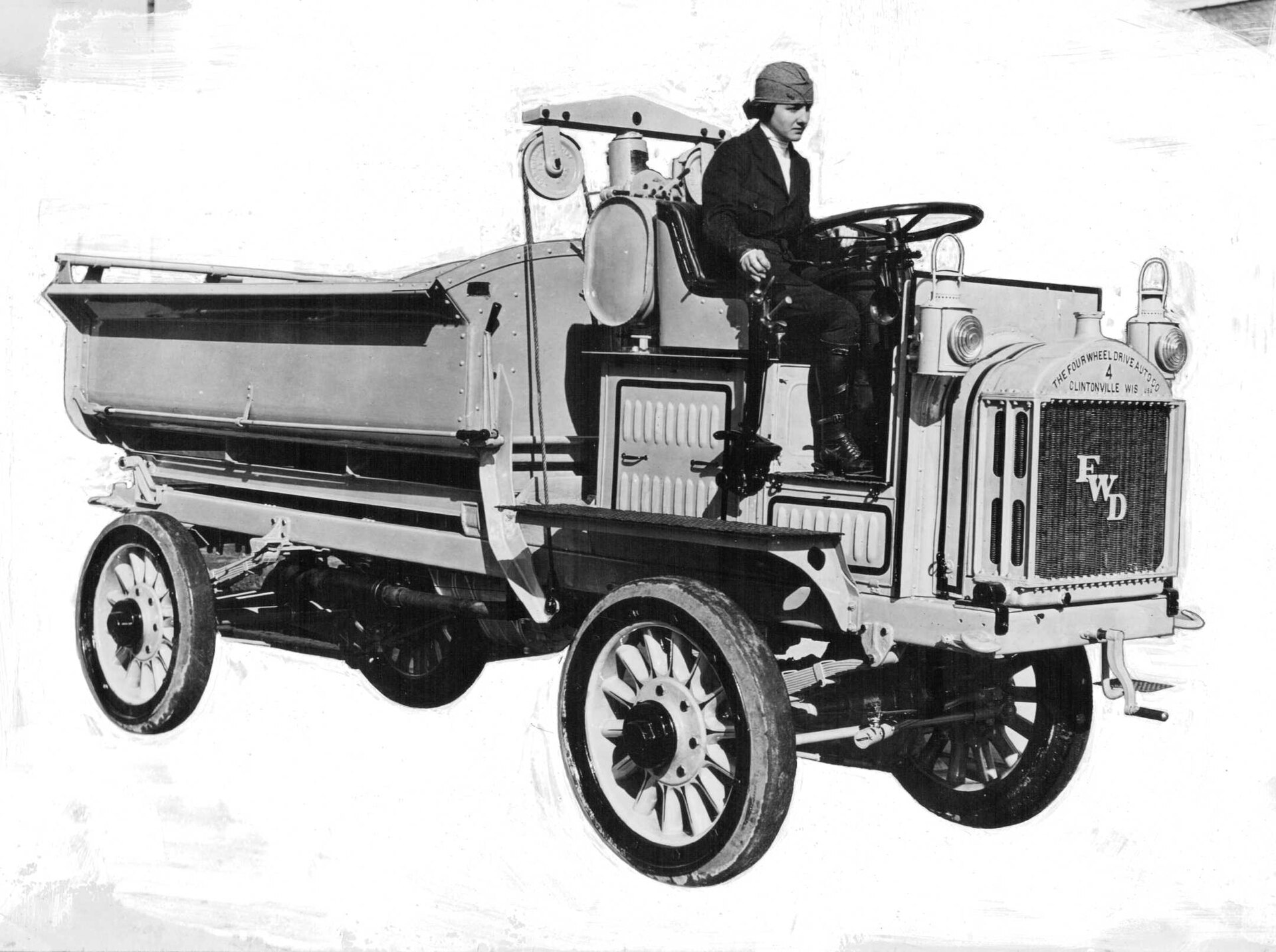
Luella was born in Wisconsin in 1897. By 1918, she was working for the Four Wheel Drive Auto Company in her home state as a truck driver and mechanic. The company had been founded some years earlier but when it found that the public was not yet enthusiastic about four-wheel drive automobiles, it switched to manufacturing four-wheel drive trucks. That, too, was a gamble. The technology was relatively new and there was no established market for four-wheel drive vehicles of any type. FWD set out to convince the Army that its trucks would work in a military setting.
By 1911, prototypes of the Model G (one and a half ton) and Model B (three ton) trucks were ready for testing. The Army arranged for a provisional regiment to march 150 miles, from Dubuque, Iowa to Sparta, Wisconsin, with two competing teams supplying the troops – mule-drawn wagons and a small fleet of trucks. Motortrend magazine summed up the results: “The test was a mixed bag in the Army’s horse-centric eyes. While the trucks could outperform the mules in most cases, reliability issues plagued some of them, and when changes of route took them off established roads, most of the overloaded trucks floundered.” It’s not surprising that a change of route proved problematic. Few roads were paved. Mostly they were horse trails, and often muddy.
The Army proceeded cautiously and placed a modest initial order. But a few years later, when World War One broke out in Europe, the British, French and Russian military placed significant orders, a lifeline for the company.
In 1916, the American military had the opportunity for another test of four-wheel drive trucks, this one unplanned. When the Mexican revolutionary Pancho Villa and his troops crossed into New Mexico to steal guns and supplies, the Army sent troops to the border to capture him. He managed to elude the Americans during a nearly year-long campaign, but the Army brought trucks to the desert and there, on a flat, open surface, soldiers learned the rudiments of motor vehicle operation. Because the trucks showed promise, the Army formed a new unit, the Motor Transport Corps. Then, in late 1917, when the U.S. entered the First World War, the Army ordered 16,000 Model B trucks that formed the heart of the Army’s motorized operations in Europe.
Driving was also becoming popular in civilian life – Ford, General Motors and other companies were producing a steady stream of vehicles. Even the Girl Scouts were on board. Beginning in 1916, a scout could earn a badge in “automobiling.”
Back in Wisconsin, Luella Bates began her career as a truck mechanic and test driver for FWD. She tested trucks, mostly Model Bs, on runs of up to seventy-five miles. After the armistice, she continued working for FWD, the only woman hired during the war to stay on.
In 1920, she drove to the New York Auto Show as part of a “Safety First” campaign. On the way, she visited twenty-five towns, charming the public and delivering a marketing message for FWD – if a woman can steer a four-wheel drive truck, anyone can.
FWD was pleased with the public’s reaction to Luella and decided to send her on three transcontinental trips. During one trip, a journalist in Monogahela, Pennsylvania reported that local men were asking the question “Can a girl be as good a mechanic as a man?” Luella, referred to in the article as “the girl driver,” answered definitively. “Certainly, women make as good mechanics as men. Didn’t the war prove that women could step into virtually every branch of industry and successfully replace men? During the war the FWD plant hired 150 women, all of whom successfully completed a course in automobiling. All of these have left however, except myself. I like the business and expect to stay in it.”
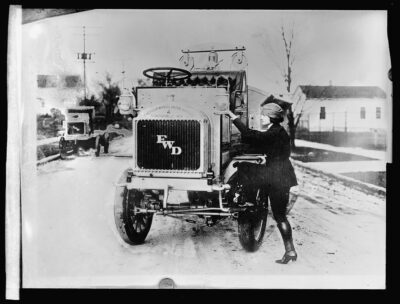
One more thing about Luella. Her clothes are both practical for driving and uncommonly stylish. Other women made news driving in the same time period but pictures show them wearing long dresses and oversized coats, a look that does not, unlike Luella’s, translate well to contemporary times.
* * *
This spring I will continue with interviews and research. Also on my agenda is a talk to the Yale University Women’s Organization about They Called Us Girls. I am honored to have been invited to kick off their spring lecture series on April 8. https://yuwowomen.org/event/kathleen-stone-author-of-they-called-us-girls-2/.
I am also looking forward to the second installment of the Boston Literary Salon, a new venture focusing on local literary history. The next event will be on April 23 featuring Matthew Pearl, author of The Dante Club, among other books. https://www.bostonliterarysalon.com/spring-2026-storytelling-bostons-literary-past
Finally, on May 14, Booklab will host Fred Fahey, author of The Scoundrel’s Son. A book of historical fiction, it picks up where Mark Twain’s The Prince and the Pauper left off. We’ll meet at my house on the 14th from 6:30 to 8:00 pm, and talk with Fred about his book. https://www.fredericfahey.com. If you’re not on the Booklab mailing list and would like to be, please let me know. I’d be happy to add you.