November 2025
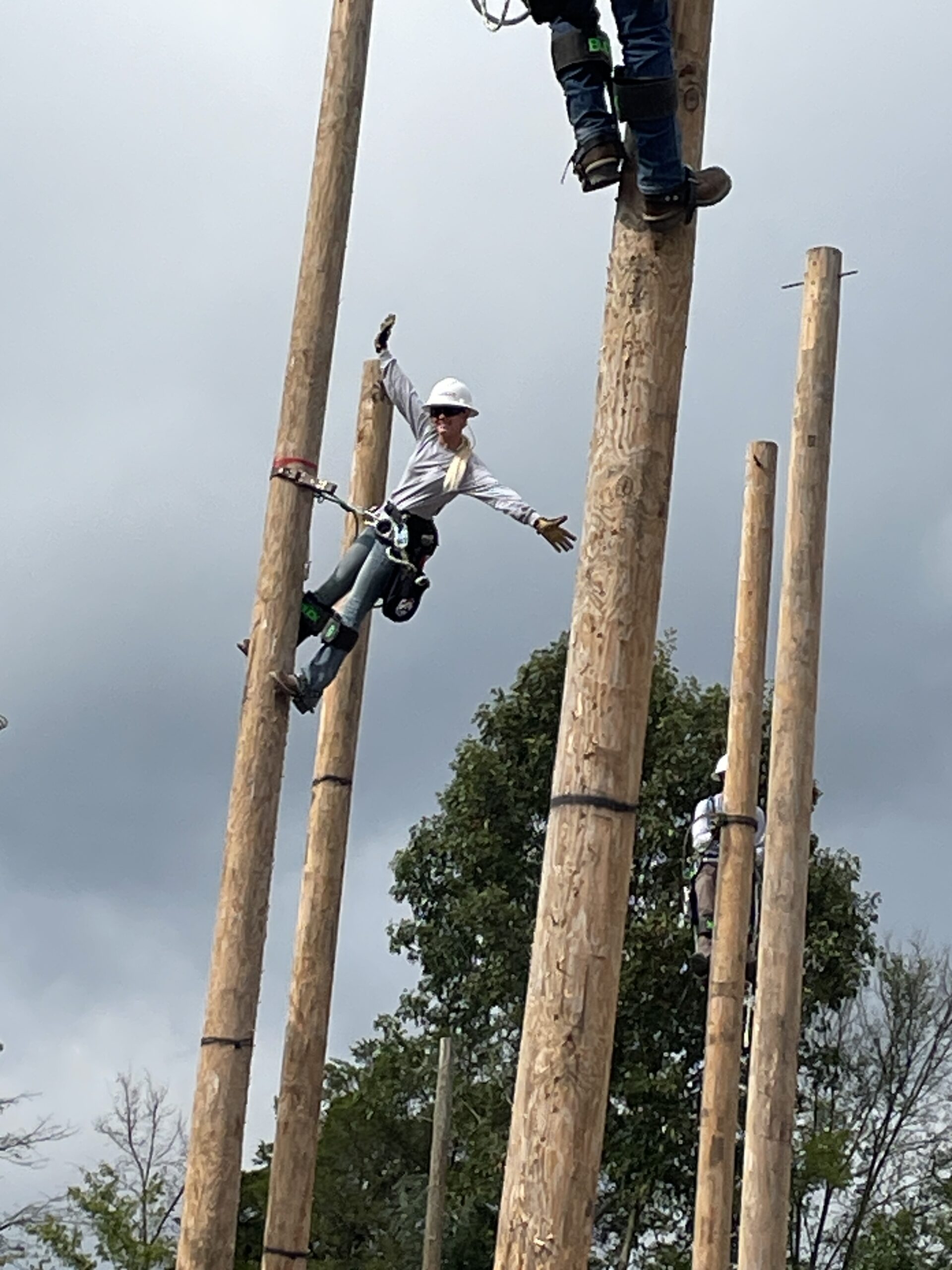
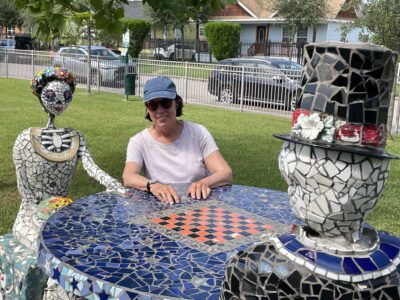
As I wrote last month, Andrew and I went to Houston in September so I could interview a maritime pilot and ride with her down the Houston Ship Channel, a unique experience for the likes of me. The city itself has much to offer including some terrific art museums – the Menil Collection, the Museum of Fine Arts, the Rothko Chapel and the Cy Twombley Gallery are the ones we visited. At Smither Park, an outdoor sculpture gallery, I tried to fit in with the locals, as you can see.
We also visited an historical site – Freedmen’s Town, a section of Houston where African Americans settled after they were emancipated from slavery. Similar communities were established elsewhere, but Juneteenth gives this one particular resonance.
In June 1865, two months after Lee surrendered at Appomattox Court House, General Gordon Granger and his Union troops arrived in Galveston, in what was then the District of Texas. He published General Order No. 3, informing enslaved people that they were free. President Lincoln had issued the Emancipation Proclamation two years earlier, but word had not reached Texas. Or if it had, slaveholders did not inform those whom they claimed to own.
Upon learning of their freedom, African Americans were jubilant. Yet a question loomed — where and how to live. Being a sharecropper or household servant were possibilities, but more daring, and more enticing for some, was the idea of living in a Black community where education and opportunity were prized. Nineteenth century Houston was not, by and large, welcoming to free Black residents; discrimination persisted for many years. Yet shortly after learning they were free, about a thousand former slaves relocated there and built their own community including houses, churches, schools and businesses. Others joined them and by 1880, 95% of Black residents of Houston lived in Freedmen’s Town. Although urban development and highways later cut through the community, it persisted.
Today, Houston is one of the most ethnically diverse cities in the country, Juneteenth is a federal holiday and Freedmen’s Town is being restored by Houston Freedmen’s Town Conservancy, a 501 (c) (3) organization. The conservancy has a robust events schedule but as it happened, Andrew and I were the only visitors on the afternoon we stopped in. A staff member greeted us and gave an introduction to the community – what it had been and how it was being restored. She pointed us toward a school that is now a research center, with photos of illustrious community members from the past. She also encouraged us to spend time with photographs by Satchel Lee that memorialize the houses and churches of the community. Also, Lee’s film of local folks talking about Freedman’s Town – why its history is important, why they live there and what it feels like to be part of the community – was running in one of the buildings.
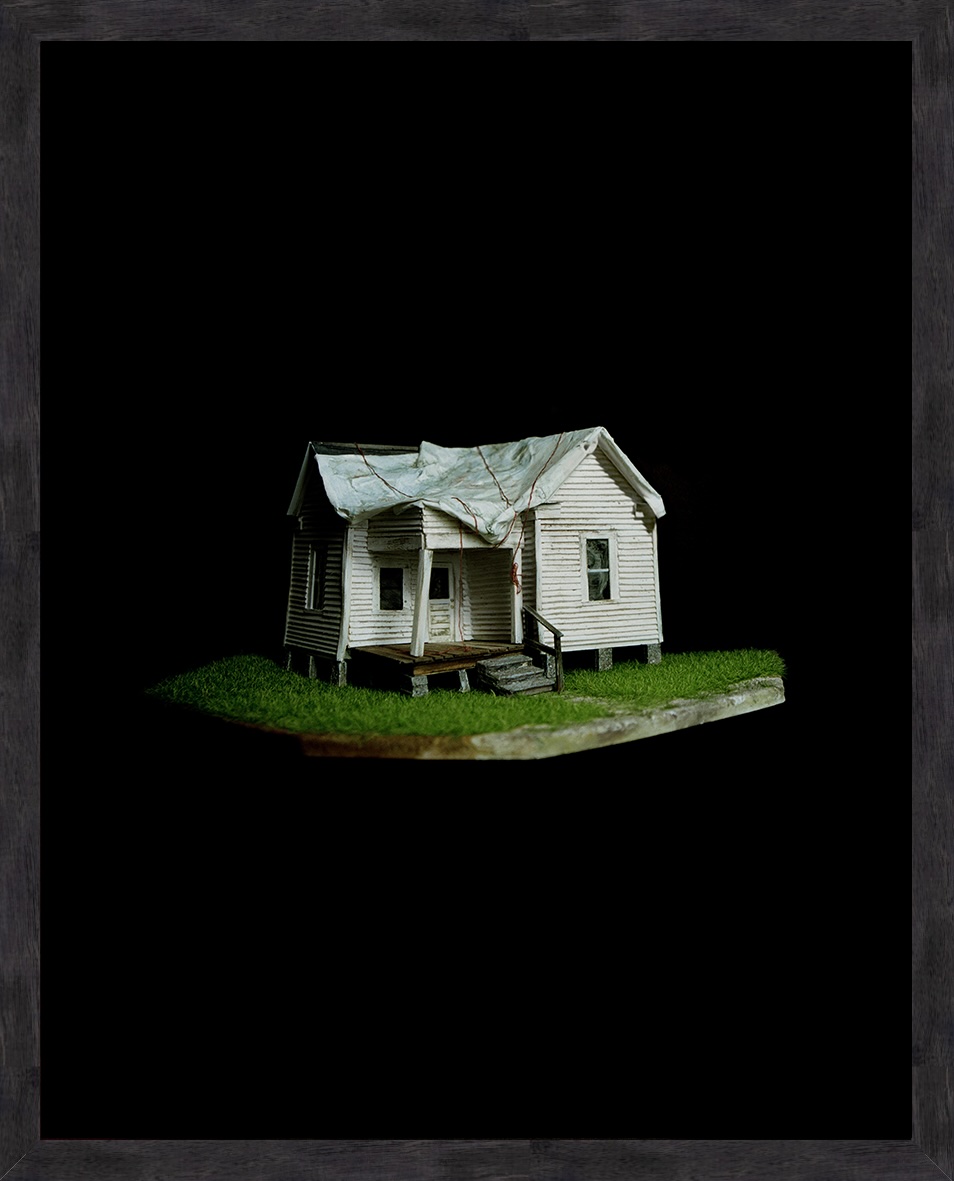
For her photographs, Lee (the daughter of Spike) works with a fabricator to make models of buildings, photographs them, and prints the enlarged images on a black background. Here are some samples from her show:
She Had Land and It Still Stands (Isabel Simms House)
Isabel Simms was the first woman in the community to own property.
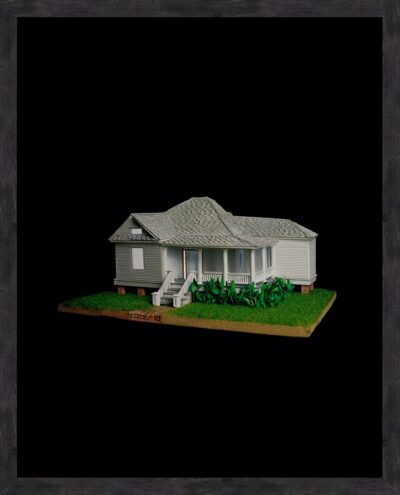
Home, Tended (Rutherford B.H. Yates Museum)
Yates attended college, taught school and, with his brother, founded a printing business. His house is now a museum.
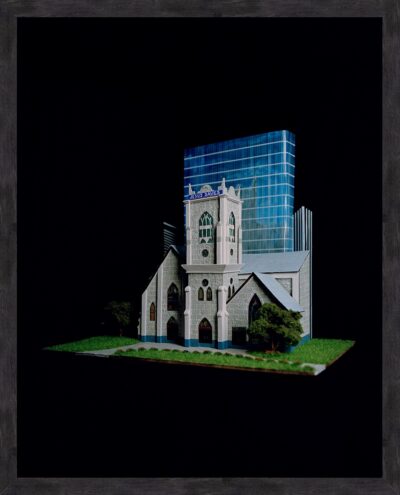
Heart Amongst Height (Antioch Missionary Baptist Church)
This, the first African American church in Houston, has a long and distinguished history, having been a mover in spiritual as well as educational, economic and social development.
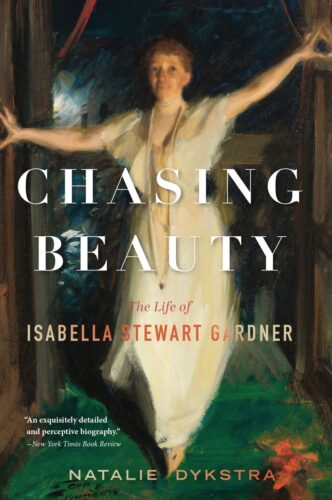
And now, for a completely different subject — on December 10 Booklab will host Natalie Dykstra, author of Chasing Beauty, a new biography of Isabella Stewart Gardner. We’ll meet at my house starting at 6:30 PM for refreshments, socializing and book talk. I’d love to have you join us, either in person or on zoom. Please let me know if you can be there or if you need more information.